
Graphene oxide (GO) is a lab-made nano-material with “special properties.” GO is more electricity and heat conductive than copper, flexible, electronic, magnetic, thermal, and stronger than diamond.
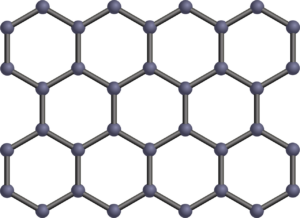 The problem? There is little or no information on GO exposure levels available. Even if GO was officially “discovered” in 2004.
Since its coming out party, everyone wants to know, is it safe?
After two decades of use, the safety profile of GO on human exposure have “not been definitely determined.”
Remember when they said Teflon was safe for cooking? When lead was safe in gasoline and paint? When asbestos was safe in insulation? When Thalidomide was safe for pregnant women?
What happened to The Precautionary Principle?
Once upon a time, The Precautionary Principle (PP) meant precautionary measures should be taken even if cause-and-effect relationships are not fully established. In other words, as a moral value, we should err on the side of caution.
Today, PP is irrelevant. As of 2007, The PP “should not be used as a basis for decision making.”
In 2007, an investigation by the UK Medicines and Healthcare Products Regulatory Agency (MHRA) concluded that adverse effects were caused by an “unprecedented biological action of the drug” and not by errors made by the manufacturers of the drug:
It is impossible to foresee all possible adverse reactions that a new drug might cause without actually testing it on humans. Even if a trial ends in tragedy, we must nevertheless continue with clinical trials simply because the benefits outweigh the risks.
In the Age of AI, The PP makes the world less safe. The question now being asked is “how many lives are lost because of the Precautionary Principle?”
To the progenerators of AI and GO, where profit outweighs risks, based on deadlines, budgets and demands, safety is no longer a moral value.
What We Know
GO is found in plastics, construction materials (smart concrete), energy storage (batteries), food (PSAF-free packaging, cardboard take out containers, biomedical engineering (i.e. drug delivery), agriculture, weather mitigation, monitoring….
and face masks.
It is now ubiquitous throughout the world, like the dandelion!

Speaking of ubiquitous, GO is also used heavily in aerosol spraying.
Key patents for GO Cloud Seeding:
-
United States Patent for cloud seeding: US11958748B2 and US20220002159A1 .
-
US Patent for cloud seeding US20220002159A1
-
International Patent for cloud seeding: WO2020148644A1.
At a concentration of 200 μg m−3, the aerosol spraying of GO nano-materials for “cloud seeding” means we all inhale it. Daily.
Cloud seeding GO materials are designed to stimulate rain or snow. GO is used for weather geo-engineering. Because GO has incredible thermal conductivity characteristics, it can actually increase the temperature.
Hence, Climate Change is the manipulation of the climate.
GO Sensors for Monitoring
The characteristics of graphene oxide provide a perfect basis on which to build the next generation of sensors (both environmental and biological):
This intelligent sensing platform represents a paradigm shift toward autonomous environmental monitoring, offering robust solutions for protecting human health and environmental quality. —Microchemical Journal 2025
Soil and Human Health Effects
Studies over the last decade show:
1. GO can affect microorganisms (decreasing bacterial growth), reduce soil enzymatic activity, inhibit nitrogen-cycling microbes, and water at certain concentrations.
2. Cellular Stress & Tissue Inflammation from repeated GO aerosol exposures:
-
may potentially increase the susceptibility of exposed humans to pulmonary infections and/or lung diseases.
-
High doses of GO in cells can cause oxidative stress, inflammation, and clotting.
3. Respiratory/lung Irritation and Granulomas
4. Immune Reactions
-
GO causes cell toxicity in human embryonic kidney cells, disrupts mitochondrial function, causes DNA damage, cell leakage, alters gene expression and induces cell death.
5. Nervous System Changes
-
Claiming to be “therapeutic,” GO alters membrane potentials, modifys synaptic signaling, directs cellular responses to external electric fields, and depolarizes cell membranes.
What We Don’t Know
What are the real-world exposure levels and cumulative effects?
What are the long-term environmental fate of released GO?
What are the full safety profiles for all potential applications?
Is GO being quietly added to fast food, canned foods, packaged foods, restaurant foods, etc?
How is GO is integral to AI monitoring (with Data Centers)?
By serving as a high-sensitivity nanomaterial for next-generation sensor arrays, when paired with machine learning, GO enables real-time, ultra-fast data collection and classification—from detecting environmental pollutants to monitoring neurotransmitters in living cells.
How does continuous, autonomous GO-monitoring affect human beings?
The Distraction
Two decades after its discovery, GO is the subject of art, music and poetry.
A short poem, written by AI, shows the brave new world of graphene oxide’s reach from its humble beginnings to a marvel of modern nanotechnology:
A honeycomb of carbon tied,
The world of two-dimensional pride.
With oxygen bound to its planar sheet,
Where physics and future chemistry meet.
Suspended in water, a phantom black,
No structural flaw or atom out of track.
A lattice of wonder, microscopically thin,
Where nanoscale engineering and art begin.— AI

For music fans, this “lattice of wonder” has inspired strange discordant music, listen here if you dare.