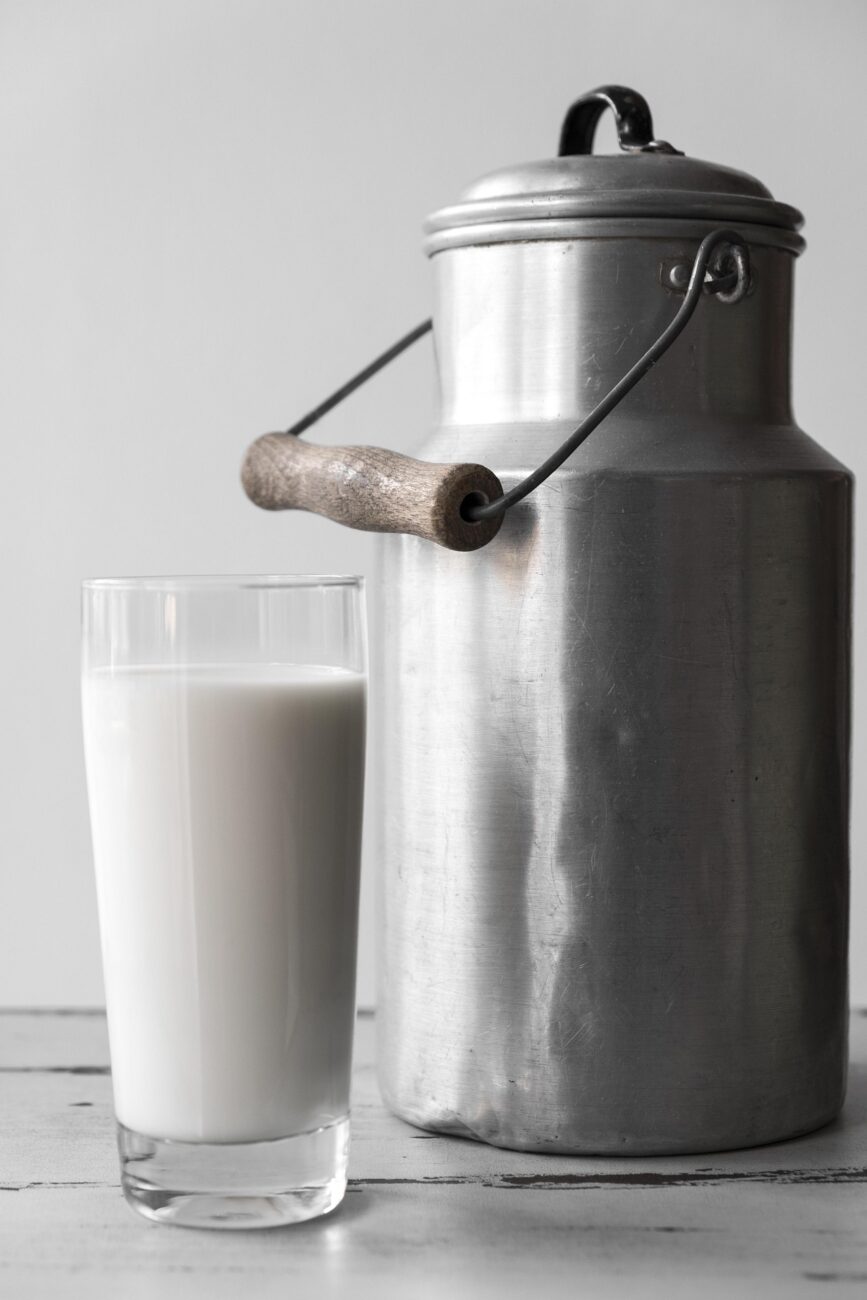
Move over pasteurized milk! Raw milk has been making a comeback!
Despite warnings of bird flu in unpasteurized milk in 2024, people flocked to raw milk then, as they are flocking to it now for reasons of health—because raw milk is a healing food!
As of 2024, more than 10 million Americans drink raw milk from healthy, grass-fed cows; national weekly sales rose by 65% from 2023 to 2024 alone.
Other milk-producing animals include buffalo, camel, goat and sheep. Depending on the region, they can include yak, donkey, camel, reindeer, horses, and moose.
The estimated international raw milk market growth in 2025 was $500 million, and estimated to be $1.2 billion by 2033.
The Distraction
Today, meat and milk are being demonized by the media as undigestible foods resulting from an allergic reaction to the Lone Star tick called the “Alpha Gal syndrome.”
Lions and Tigers and Bears!
State dairy agencies, and alphabet soup agencies (CDC, FDA) are working overtime to distract whole populations using fear to stop people from drinking real milk (and eating real meat). The stories go something like this:
-
She can’t eat meat.
-
She can’t eat dairy.
-
She can’t even use regular toothpaste.
For more on the “Alpha Gal” syndrome, go here.
Question: Are we seeing a prelude to the tick-borne disease vaccines?
Another question: Is this about the Lone Star tick or the quality of the commercial meat & milk supply?

The Real Milk Story
What is happening to the food supply? We can either take time to understand the level of contamination of the food supply, investigate tick bites, or seek out real food. Hint: The latter is fastest.
To avoid the distractions, we must be savvy consumers.
We must know the difference between the commercially processed meat of Concentrated Animal Feeding Operation (CAFO) cows (injected with chemicals and biologicals), versus organic meat of grass-fed cows.
Likewise, we must differentiate between the milk of sick cows from pasteurized, CAFO dairies (which requires pasteurization), versus healthy, grass-fed cows of small dairies. [Note: organic pasteurized dairies co-mingle milk].
California raw milk farmer, Mark McAffey described raw milk simply:
It is delicious. It makes you feel good (the gut-brain serotonin and dopamine cycle). It’s great for asthma and literally saves lives.
Because mainstream media demonizes the benefits of raw milk, truthful information is hard to come by. We must go back in time to find the pattern and the evidence.
Raw Milk as Medicine
In the early 1900s, Dr. J.R. Crewe of the Mayo Foundation, a precursor to the Mayo Clinic, promoted a treatment called the Milk Cure, which consisted of patients on bed rest consuming four to five quarts of raw, grass-fed cow’s milk daily.
Within a few weeks, patients recovered from tuberculosis, diabetes, heart and kidney disease, obesity, anemia, skin disorders, digestive diseases, and underweight patients.
Sounds like a recipe for lactose intolerance! For a detailed assessment of raw milk health benefits, including neuro-protective, cardiovascular, immune. (anti-cancer), go here.
In May 2013, during a special scientific Grand Rounds presentation entitled “Unpasteurized milk: myths and evidence, Nadine Ijaz, MSc, demonstrated that raw milk is a low-risk food.
Ijaz reviewed three QMRAs published in the Journal of Food Protection, along with dozens of other studies, to challenge the long-held view that raw milk is a high-risk food.
This review happened during a time when raw milk farms were attacked both in Canada and the U.S. (2011-2013). The Dairy State of Wisconsin rallied legislators to support small farmers.

Today, the Journal of Food Protection has turned on itself to call raw pet food and milk “highly pathogenic” and a “liability” to the raw pet food industry.
What changed?
The power of the global dairy industry! US retail pasteurized milk sales, alone, account for roughly $24.9 billion per year, before accounting for value-added products like aged cheeses and specialty yogurts.
In 2026, even organic dairy brands are suing the Federal Milk Marketing Order (FMMO) program for favoring conventional (CAFO) dairies. Could it be that FMMO “reforms” are expected to decrease the All Milk Price?
The Myth of ‘High Risk Raw Milk’
The breaking news from the 2013 QRMA assessment showed that evidence had long been wrongly used to push the myth of the 1930s, that raw milk is a high-risk food.
The assessments showed that unpasteurized milk is a low-risk food for several major pathogens.
-
Campylobacter
-
Shiga-toxin producing E. coli
-
Listeria monocytogenes,
-
Staphylococcus aureus
Since the 1980s, evidence shows raw milk and colostrum do not support the growth of some of the most common and deadly pathogens, including Salmonella, E. coli O157:H7, Campylobacter and Listeria. Campylobacter can multiply in pasteurized milk and other foods, but not in raw milk (Diker KS. Mikrobiyol Bul 1987 Jul;21(3):200-5.)
This low-risk profile was found to apply to healthy adults as well as immunologically susceptible groups such as pregnant women, children, and the elderly.
The quality of raw milk depends on the farmer’s knowledge and the health of the cows! Know your farmer! Find a match at https://farmmatch.com/.

Evidence of Raw Milk Safety
-
The QMRA is considered the gold standard in food safety, recommended by the UN Codex Alimentarius and used by Health Canada and the U.S. FDA.
-
Ijaz emphasized that the “high-risk” label for raw milk was based on inappropriate or outdated evidence.
-
The accuracy of the QMRA results was supported by peer-reviewed outbreak data and her own analysis of U.S. raw milk outbreak data, which found negligible risk of Listeria monocytogenes in raw milk.
-
A 2013 review noted a 40-year worldwide absence of listeriosis cases from raw milk, attributed to the protective effect of non-harmful bacteria naturally present in raw milk.
Cherry Picking Data
All types of milk aside, there are almost 24,000 foodborne illnesses reported each year from pasteurized products.
When pasteurization (of milk from sick cows) does not work, people get sick! The same can be said for the milk of sick cows from raw milk dairies. That is why people must ‘know their farmer.’
-
The US CDC ignores data of significant outbreaks of foodborne illness linked to pasteurized dairy products. In 2007, 135 people became ill from pasteurized cheese contaminated with e. coli, and three people died from pasteurized milk contaminated with listeria.
-
In 1985, over 16,000 confirmed cases of Salmonella infection were traced to pasteurized milk from a single dairy plant in Illinois. According to the 1987 JAMA, the total affected was between 168,791 and 197,581 people, the largest ever outbreak.
-
A 2024 Listeria outbreak was linked to pasteurized plant-based milk.
BC CDC Expert Response
Back in 2013, Dr. Tom Kosatsky, BC CDC’s Medical Director of Environmental Health Services and Canada’s National Collaborating Centre for Environmental Health Scientific Director, welcomed Ijaz’s presentation as “up-to-date” and a “very good example of knowledge synthesis and risk communication.”
Today, the BC CDC and US FDA say raw milk is “dangerous and harmful.”
What Gives?
As the CDC and FDA Cherry-pick the data, they make a case against raw milk. They create cover stories blaming birds (2024), and the Lone Star tick (2026) to generate fear. They attempt to dampen the spirit of people seeking healthy food.
In 2010, Wisconsin state regulatory officials went after raw milk farmers for “producing milk without a license,” and “operating a dairy plant without a license” even as these farmers did not participate in commerce. Regulators also targeted Wisconsinites and Minnesotans who connected people with raw milk.

When the attacks backfired, state regulators changed the narrative from low-risk raw milk to high-risk raw milk, and have since thrown in the Lone Star tick for good measure. No proof provided. No questions answered. Meanwhile, fake meat is USDA-approved.
By the evidence of an increase in raw milk drinkers, and by compliance of raw milk regulations by raw milk farmers, like Mark McAffey, and others, farm-direct sales and retail sales of raw milk are allowed under specific permits in many states.
Raw milk still carries a low risk of illness compared to other foods.
Why?
Because when you kill off the beneficial microbes in raw foods (via heat/pasteurization), you lose the protections that make it a healing food.
Related articles:
- A Campaign for Real Milk
- Is Raw Milk Safe?
- Raw Milk Institute
- Nature’s Perfect Food
- Organic Pastures