
Wisconsin the DairyLand! That means dairy cattle.
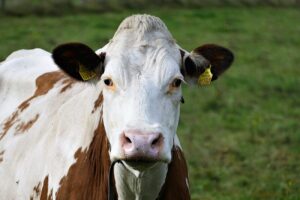 Mooove over, milk!
Wisconsin is also 9th state overall in U.S. beef production. That means beef cattle.
Small Farms
The Wisconsin beef farm industry is dominated by what might be referred to as smaller scale operations. In 2022, 63.7% had fewer than 20 head of cattle and 39.9% had few than 10 head of cattle.
In Wisconsin, people want a choice between commercial products from CAFO farmers, vs. healthy products from SMALL farmers.
But, things are about to change. If the WI DATCP regulatory agency has its way, there will be no choice for Wisconsinites, as new laws with large fees will drive small farms out of business.
Recently, Gov. Evers announced $5 Million to Support Local Farmers and Bolster Statewide Hunger Relief Efforts.
Massive Fees Hurt WI Small Farmers
Of the $5 million fund, over $2.4 million will go to the Meat Inspection Program to ensure meat products are produced “safely and match nutrition labels.” What does that really mean?
 As a rule-making authority within its jurisdiction, DATCP now has new powers.
Last October, some legislators attempted to stop massive fee increases, which had not changed since 2009.
Making changes like this without including lawmakers puts agencies in a position of acting as a “pseudo-Legislature” despite not being elected. — Sen. Romaine Quinn
According to a 2025 comment from representative Karen Hurd:
The rule contains massive fee increases for livestock dealers, markets, and truckers.
If implemented, these fee hikes will threaten smaller livestock markets and increase costs on our farmers, many of whom are already operating under tight margins.
After a public comment period and a court ruling….
DATCP gained new authoritative powers. It can determine fees, digital ID chipping, and vaccination of cattle—without legislative oversight.
The State Supreme Court Ruling
A recent state Supreme Court ruling limited the Legislature’s ability to block erratic rule changes from state agencies, giving DATCP power without accountability.
 A November 2025 DATCP News brief was as clear as mud:
The revised fee proposal will amount to an inflationary adjustment to account for the roughly 17 years since the fees were last adjusted to support these animal health programs. With the reduction in the proposed fees, additional state resources will be needed to fully fund the programs.
A Milwaukee Journal Sentinel article was crystal clear:
Under the DATCP proposal, the “Animal Market Class A” license fee would change from $420 to $7,430 and a late fee for those markets would increase by 1,700% — the price skyrocketing from $84 to $1,486.
The registration fee for truckers transporting livestock in Wisconsin would increase from $60 to $370 — a 517% increase that would impact the roughly 1,000 livestock truckers in the state.
Surrounding Midwest states, such as Michigan, Minnesota, Iowa and Illinois, livestock market license fees range from $50 to $300 — a stark contrast to the proposed $7,430 in Wisconsin.
Consumers will be directly affected.
Is that Food Security or Food Insecurity?
Related articles:












Dear Roseanne, thank you for your article. The question is, why would the State of Wisconsin move against small dairy farmers? It reminded me of what may seem like an unrelated anecdote. A few years ago, an immigrant exile from an authoritarian country told me a story about an uncle of his who was an official in charge of a state-run institution for mental patients confined in a countryside facility. The official, tired of waiting for food supplies for extended periods, decided to train patients in self-sufficient farming. This practice soon became so prosperous that they were able to trade their surplus produce for tangible goods with villagers nearby. When the central authority found out, they shut down all farming at the institution and removed the administrator who had introduced it. The mental institution returned to waiting for the belated food supplies to arrive. At first, the fired official did not understand what had happened. Then it dawned on him that what the State wanted was to maintain total control through food dependency. Incidentally, the patients had experienced remarkable improvements in their behavior while engaged in successful small=scale food production.
Dear Frank, you answered your own question.