
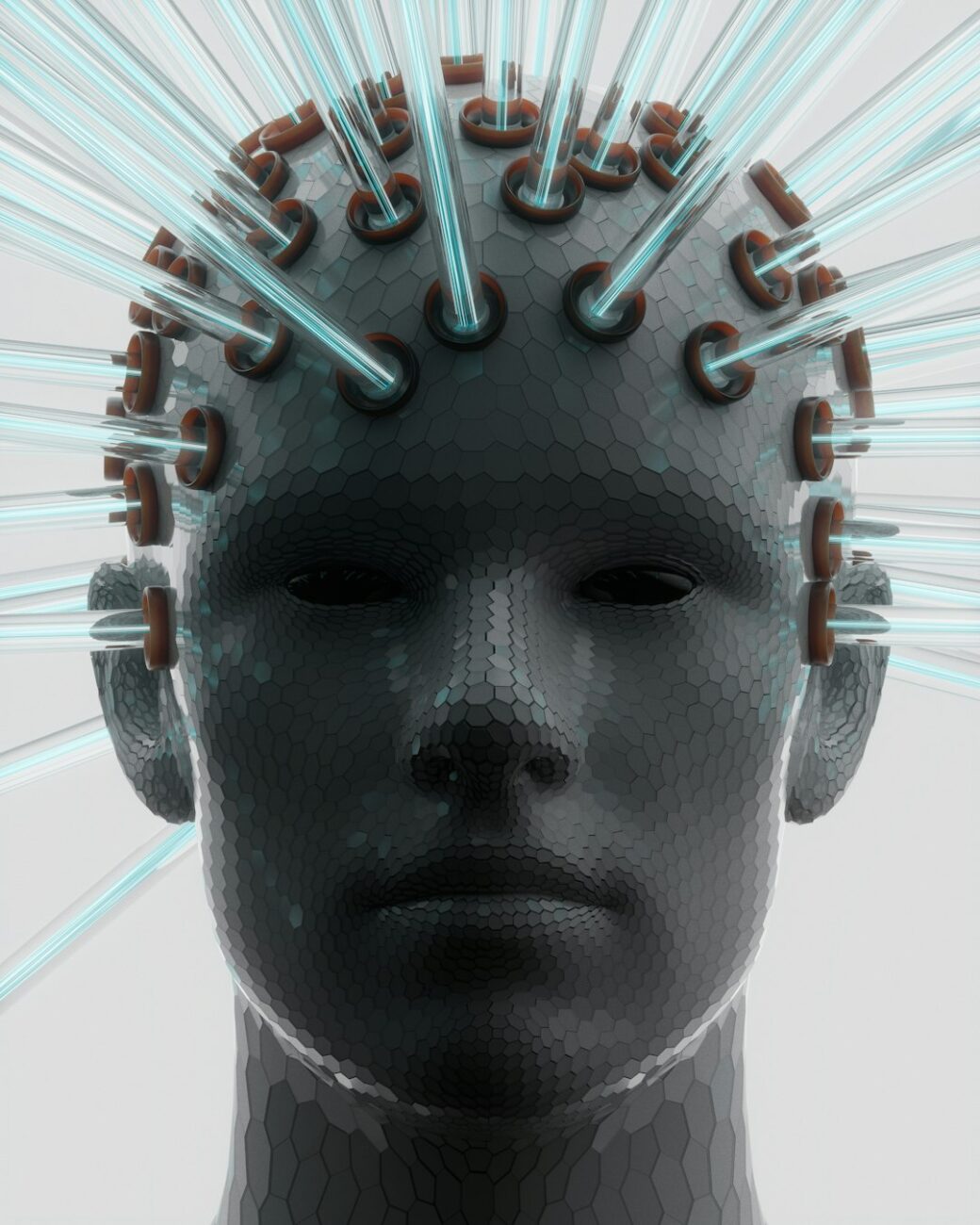
… The real reason for Data Centers!
The question most people ask on social media is What are data centers really for?
There are more than 5400 windowless mega-buildings (data centers) spread across the US landscape, more than the top 10 countries combined.
As of mid‑2026, there are over 11,700 operational data centers worldwide,
- United States: 5,426 data centers
- Germany: 529
- United Kingdom: 523
- China: 449
- France: 322
- Australia: 314
- Netherlands: 298
- Canada: 293
- India: 271
- Russia: 251
With people divided more than ever (on any issue), the one issue bringing everyone together are these mega “hyperscale” DATA CENTERS, and idea of NOT IN MY BACKYARD, or within 35 miles!
The “big three” Data Center developers are Amazon Web Services, Microsoft Azure, and Google Cloud, which account for 63% of spending on cloud infrastructure services.

The Real Reason for Data Centers?
With the rhetoric of Climate Change turned on its head by the first wave of energy-hungry Data Centers, what these energy sinks really for?
The official answer is “demand and computing via AI and the Cloud.”
Yeah, we’ve heard a similar line before, when 5G suddenly appeared during the COVID pandemic for “faster download speeds.”
For the majority of people, the real purpose for Data Centers goes unanswered.
In the meantime, people are distracted by fighting Data Centers for:
-
draining electricity (the size of a city), and increasing electric costs.
-
polluting the water.
-
destroying the land, while
-
employing relatively few people once they’re operational.
The Future 7G TeraHertz Spectrum
The real reason for Data Centers is undisclosed. These megaliths are military installations formed via private-public partnerships, outside public discourse.
When we, the public, dig deeper, we come to the 7G terahertz spectrum. 7G will require massive, high‑capacity data center infrastructure to support its applications.
The 7G Spectrum is the seventh generation of wireless technology, expected to be standardized around 2033–2035 and commercially deployed between 2038–2042.
In plain terms, the 7G spectrum = the human body.
The human body already connects to wireless networks through wearables (watches, clothing, medical devices, smartglasses, fitness trackers).
If wearables are bridges between human energy and wireless networks, could energy consumption turn around to an alternate energy source? The wearer?
Narrative Development on EM Fields
The end goal begins with the means of a scientific narrative that considers human tissue uaffected by emissions above 100 GHz from electromagnetic (EM) waves.
It is important to remember that the strength of a magnetic field decreases dramatically with increasing distance from the source. —Photothermal Effects…Sci Rep. Sept. 2023
This frame paves the way to accept nanosensor networks in the human body.
Q: What about temperature increases in human tissue and its effects?
A: there is feedback from the body that works to bring down the temperature to the standard value. — Sci Rep, 2023
Scientists claim blood flow under the tissue is the medium needed to transport heat and maintain body temperature (though they do not explain how).
With human as commodities, human temperature regulation is equated to “geothermal heating,” or efficient cooling systems in bodies.
Health Effects?
Science neglects to disclose the serious human health effects of ionizing (i.e., DNA damage) and non-ionizing (i.e., free radicals leads to cancer) radiation.
The EM fields of transmission lines and transformer stations, that connect data centers like a dot-to-dot maze, can lead to Leukemia.
Future Energy Generation & Biodigital Convergence
Nanonetworks and nanomaterials have opened the AI door to a new generation of electronic nano-components such as nanobatteries, nano-memories, logical circuitry in the nanoscale and even nano-antennas.
Nanomaterials and Nanonetworks refers to communication through the Wireless Body Area Networks (WBAN)…. human bodies for the Biodigital Convergence.
nanonetworks for short-range communication based on calcium signaling and molecular motors as well as for long-range communication based on pheromones. Ian F. Akyildiz et al.
Easy math suggests 2+2 = human energy. And various articles fill in the gaps.

Human Nodes on the Network
We’ve all heard about ‘The Internet of Things’ using wireless technologies. However, what we may not know is that human energy is a node on that network.
Synthetic Biological Intelligence = Human Hybrids as nodes on the network.
In 2025, CL1 was identified as the world’s first commercial “biological computer” that runs on living human brain cells grown on a silicon chip to process information and learn in real time. [“wetware” vs. software or hardware].
With A.I. moving faster than you can say A.I. the human being has become a living node on the wireless network.
Increasingly, we are the network. — Forbes, Jun 05, 2013
The human being underlies the meaning of Artificial Intelligence.
While it is important to question the Data Center and Transmission line buildouts, we must become aware of the true purpose for “the demand for AI.”